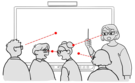


Gaze Signaling in Interactive and Collaborative Small- and Large-Scale Actions (GazeACT)
Research on eye movements examining perceptual and cognitive processes have primarily been studied in isolated (single observer) scenarios, even when aiming to scrutinize social interactions and/or collaborations in humans. While there is some evidence to suggest that gaze in small-scale and large-scale human social interactions and collaborations can be highly informative to understand the intentions of others, our general understanding of gaze signaling in such scenarios is very limited. Therefore, the aim of this tandem research project is to examine the function of gaze signaling in guiding actions in small-scale hand movements and large-scale whole-body movements in dynamic, real-time interactive and collaborative tasks while measuring gaze of two individuals (i.e., two interactors/ two collaborators). Interactive tasks refer to tasks in which two individuals interact while each individual pursues their own goals (e.g., grasping and handing over an object or walking past another without colliding). In contrast, collaborative tasks refer to tasks in which two individuals perform a task together to achieve a joint goal (e.g., jointly grasping and lifting an object to fit it into a frame or carrying a table together to fit it through a gap). Studying these tasks will allow us (i) to identify, characterize, and compare gaze patterns in interactive and collaborative actions, and specifically to improve our understanding of (ii) how gaze signaling and its interpretation changes while actions unfold over time, and (iii) how gaze signaling is affected by factors of the other person (e.g., informational value of the other’s gaze) and the joint task itself (e.g., task difficulty). With this tandem (i.e., small-scale and large-scale) approach, this project aims at making a significant contribution to two key development areas of UGaze, namely (I) Gaze Expression and (II) Gaze Sharing, across a broad range of commonplace, social human interactive and collaborative daily tasks.
Deutsche Forschungsgemeinschaft (DFG) - Project number 562910865

Prof. Dr. Rouwen Cañal Bruland
Institut für Sportwissenschaft, Bewegungs- und Sportpsychologie, Friedrich-Schiller-Universität Jena
Prof. Dr. Rouwen Cañal Bruland has been Professor of Exercise and Sport Psychology at Friedrich Schiller University Jena since 2016. He received his doctorate from the University of Münster in 2007 and was Assistant Professor at Vrije Universiteit Amsterdam from 2008 to 2016. Other stages in his career include visiting professorships at Loughborough University (2023–2026) and the University of British Columbia (2023), as well as international research stays in Liverpool, Hong Kong and Virginia, among other places. His research focuses on motor learning and control, embodied cognition, perception-action coupling, expertise research, visual perception, attention, anticipation, and social interactions in sports. He is the principal investigator in several DFG and foundation-funded projects and holds numerous academic positions, including deputy director of the Institute of Sports Science at FSU Jena, member of the faculty council, and spokesperson for the sports psychology section of the German Psychological Society. He is also associate editor of Psychology of Sport and Exercise and Human Movement Science.
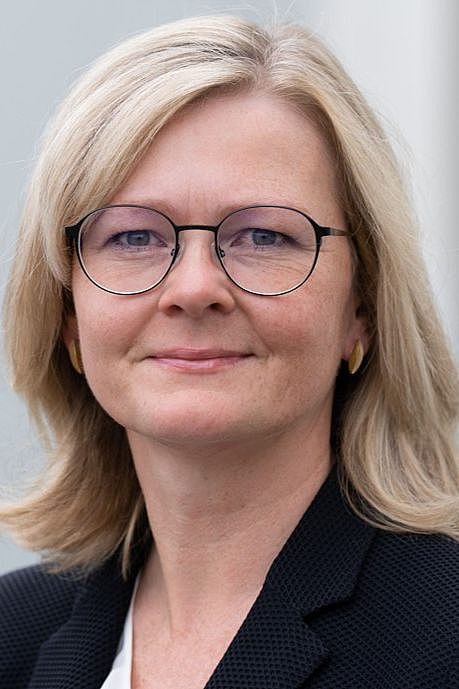
Prof. Dr. Katja Fiehler
Abteilung Allgemeine Psychologie, Arbeitsgruppe Wahrnehmung und Handlung, Justus-Liebig-Universität Gießen
Prof. Dr. Katja Fiehler studied psychology at Dresden University of Technology and received her doctorate in 2005 from the Max-Planck-Institute for Human Cognitive and Brain Sciences in Leipzig. She then worked as a research assistant and assistant professor at Philipps University of Marburg, where she habilitated in psychology in 2011. She then accepted a position at Justus Liebig University Giessen, initially as a Heisenberg Professor (W2, 2011–2016), and later as Professor of Experimental Psychology “Perception & Action” (W2, 2016–2020). She has been a W3 professor there since 2020. Her research topics include sensorimotor prediction processes, goal-directed movement control, perception and action in 3D space, virtual reality methods, body perception and agency, and attention control in gaze and grasping movements. She is also active in several scientific leadership roles, including in DFG-funded collaborative projects.
Team members

Anushree Ganesh
Abteilung Allgemeine Psychologie, Arbeitsgruppe Wahrnehmung und Handlung, Justus-Liebig-Universität Gießen
Anushree Ganesh is a PhD student in the GazeACT project in the Department of Psychology and Sports Sciences at JLU Giessen. She completed her Bachelor's in Cognitive Neuroscience and Psychology from University College Utrecht, Netherlands, and her Master's in Cognitive Neuroscience from Radboud University, Netherlands. Her main research focus is in sensorimotor neuroscience, specifically in understanding how we integrate complex sensory information (such as visual information) from the real world to build internal models, and how we use this information to guide action and motor behaviour.

Isabell Jacob
Institut für Sportwissenschaft, Bewegungs- und Sportpsychologie, Friedrich-Schiller-Universität Jena
Isabell Jacob is a PhD student in the GazeACT project at the Department for the Psychology of Human Movement and Sport at Friedrich Schiller University Jena. She received her Bachelor’s and Master’s degrees in Psychology from FSU Jena, with a primary focus on Cognitive Psychology and Cognitive Neuroscience. As a research assistant at the Department of General Psychology and Cognitive Neuroscience, she contributed to a project investigating personality perception from voices. Her general research interests include social interaction, eye gaze signaling, and multisensory perception in social contexts.