

CrowdGaze: A Dual Approach to Studying Gaze Interactions in Stationary and Moving Crowds Using Eye Tracking in Real and Virtual Environments.
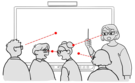
CrowdGaze examines how gaze interactions facilitate non-verbal negotiation of space and social coordination in dense, dynamic crowds, both in real-life and immersive virtual environments. Unlike herd animals with wide visual fields enabling effortless group movement, humans’ forward-facing eyes are optimized for face-to-face communication but are less effective in crowded settings, especially where density exceeds 2–4 people per square meter. Despite these limitations, gaze plays a dual role: it helps individuals interpret movement intentions and coordinate actions, while also conveying social norms, roles, and appropriate behavior. Our project investigates gaze behavior in three everyday scenarios: (A) waiting in dense crowds, (B) following others in unidirectional crowds, and (C) negotiating social norms in queueing situations. In Scenario A, individuals often avoid direct eye contact to reduce discomfort, while still monitoring their surroundings. Scenario B focuses on movement coordination, exploring how gaze indicates changes in walking direction, signals belongingness within groups, and facilitates leadership dynamics. In Scenario C, gaze acts as a social signal to enforce norms—disapproving stares may deter overtaking, while overtakers often avert their gaze to avoid conflict. This interdisciplinary project integrates expertise from social psychology, movement science, and virtual reality. Real-life experiments (REs) with eye tracking will uncover gaze patterns in natural crowd settings. The experiments will then be replicated in virtual reality (VR) under controlled conditions to investigate differences and similarities in gaze behavior between both contexts. Based on these insights, we then aim to develop algorithms that enhance the design of computer-controlled virtual agents embedded as virtual pedestrians, creating more realistic simulations of human interactions in populated spaces. The findings will enhance crowd safety and inform the design of public spaces, while also advancing methods for studying gaze in dynamic environments. Consequently, CrowdGaze significantly contributes to understanding human behavior in real-life and virtual crowds, making it a vital addition to the SPP UGAZE initiative.
Deutsche Forschungsgemeinschaft (DFG) - Project number 563020667
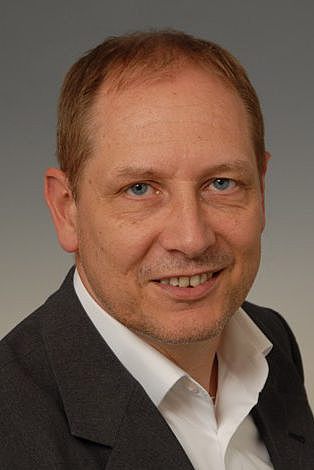
Prof. Dr. Torsten Wolfgang Kuhlen
Visual Computing Institute, Virtual Reality & Immersive Visualization, RWTH Aachen University
Prof. Dr. Torsten W. Kuhlen studied computer science at RWTH Aachen University, graduating in 1992 and obtaining his doctorate in computer science there in 1997. He then worked as a research scientist at RWTH Aachen University from 1997 to 2014, as well as at Forschungszentrum Jülich from 2014 to 2015. From 2008 to 2015, he was an adjunct professor at RWTH Aachen University, in 2015 he was appointed full professor of virtual reality and immersive visualisation at RWTH Aachen University. His research focuses on virtual reality, immersive visualisation and interactive 3D systems. He develops VR methods for spatial exploration of complex data, investigates navigation and interaction concepts and works on immersive application-oriented visual analytics approaches. He heads the ‘Virtual Reality & Immersive Visualisation’ team and is involved in numerous interdisciplinary projects.

Prof. Dr. Anna Sieben
Institute for Advanced Simulation (IAS-7), Civil Safety Research, Forschungszentrum Jülich
Prof. Dr. Anna Sieben has been Jülich professor in social psychology at the University of Wuppertal and the Forschungszentrum Jülich since 2024. Her research focuses on social behaviour in crowds and pedestrian groups, social norms, body-based communication, stress, and motivational processes, as well as behaviour in critical crowd situations. She completed her diploma in psychology at the universities of Freiburg and Cologne between 2002 and 2007, subsequently completing a master's degree in Gender & Culture at Goldsmiths, University of London. She obtained her doctorate at Ruhr University Bochum in 2013 and was habilitated there in 2022. From 2022 to 2024, she was an associate professor at the University of St Gallen in Switzerland.
Team members

Dr. Andrea Bönsch
Visual Computing Institute, Virtual Reality & Immersive Visualization, RWTH Aachen University
Dr. Andrea Bönsch is the deputy head of the 'Virtual Reality and Immersive Visualization' group, led by PI Prof. Kuhlen, and co-head of the division "Computational Science & Engineering" at the IT Center of RWTH Aachen University. In addition to her management responsibilities, she is a senior researcher specializing in Social Virtual Reality (VR) applications, exploring the integration of computer-controlled, anthropomorphic virtual agents as emotional human interfaces. Her work focuses on enhancing the plausibility of the agents' social behavior and their interactivity among each other, as well as on improving their interactions with Virtual Reality users. A key area of her research is thereby co-navigation with virtual agents—a topic she also addressed in her dissertation in computer science titled "Social Wayfinding Strategies to Explore Immersive Virtual Environments," successfully defended in June 2024.

Fatma Celebi
Fatma Celebi will start her PhD in Spring 2026 at the Institute for Advanced Simulation, Forschungszentrum Jülich, as part of the CrowdGaze project. She holds a BSc in Psychology from Middle East Technical University and an MSc in Mind, Brain, and Behavior from Justus Liebig University Giessen, where she worked on perception and cognition using experimental methods, with a focus on dynamic facial expressions and social cues. She brings a background in visual and haptic perception and experimental psychology and is now expanding her work toward the study of gaze behavior, social coordination, and social norms in dynamic crowd contexts within this project.
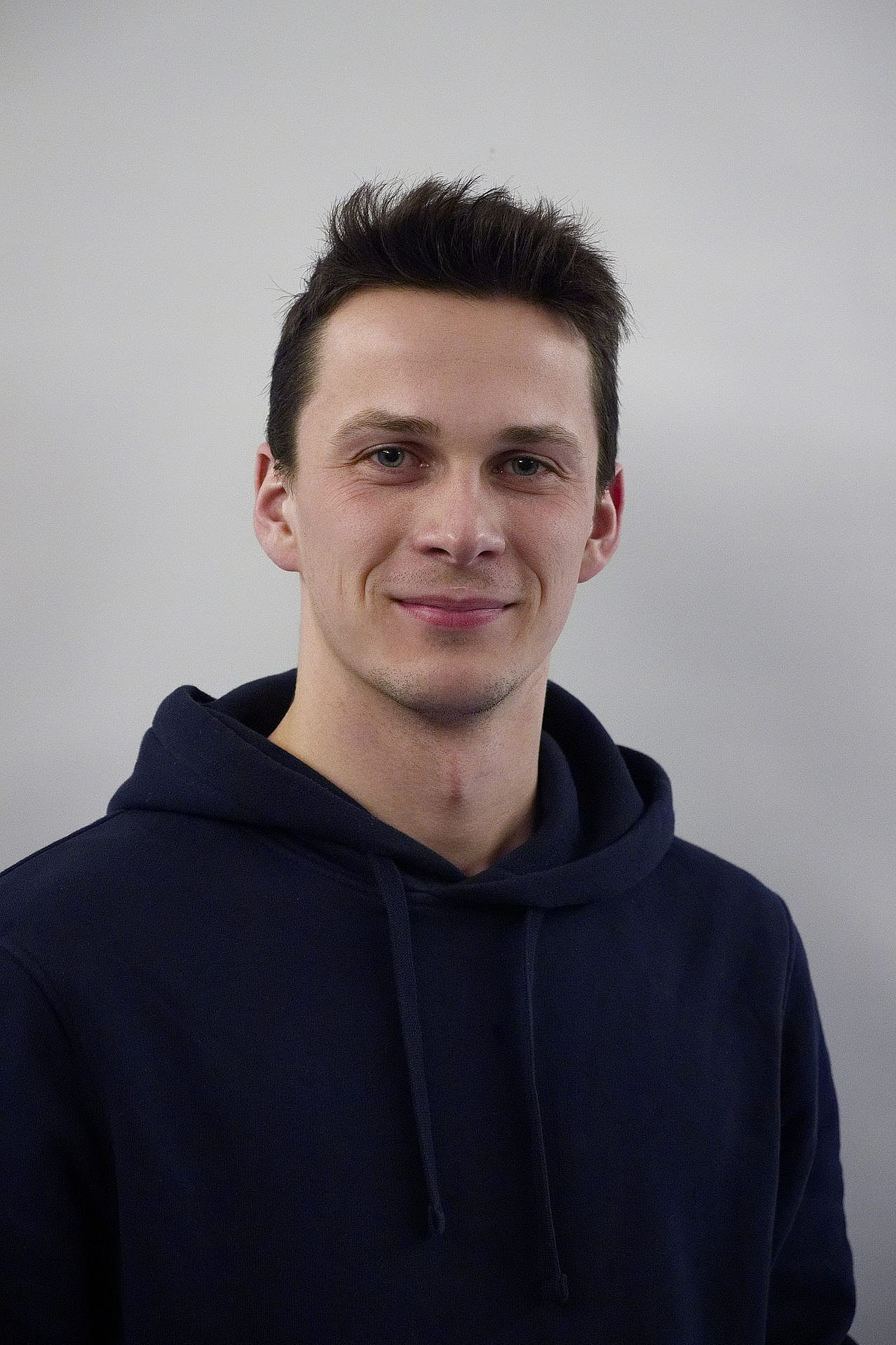
Jefta de Leeuw van Weenen
Visual Computing Institute, Virtual Reality & Immersive Visualization, RWTH Aachen University
Jefta de Leeuw van Weenen will start his PhD in Spring 2026 working in the project CrowdGaze together with Torsten Kuhlen, Anne-Hélène Olivier, and Andrea Bönsch.

Prof. Dr. Anne-Hélène Olivier
Université Rennes 2
Prof. Dr. Anne-Hélène Olivier is an Associate Professor (HDR) at the University of Rennes 2, France, and a research scientist at INRIA/IRISA in Rennes within the VirtUS team. She received her PhD in Sports Sciences (Biomechanics) in 2008 from the University of Rennes 2. Her research lies at the intersection of human movement science and virtual reality (VR), with a focus on human locomotion and social interactions. Her experimental approach leverages VR to recreate and control complex, dynamic situations that are difficult to study in real life, such as pedestrian interactions with a virtual human or a crowd. This includes developing locomotion metaphors and improving the design of virtual humans, evaluated through user studies on perception and user behavior, including their body movement but also their gaze. Anne-Hélène has held several key community roles: General Co-Chair of IEEE VR 2025, Steering Committee of the Symposium on Applied Perception (SAP, 2023–), and Associate Editor of IEEE Transactions on Visualization and Computer Graphics (TVCG) since 2023. She has also served as program chair for major conferences including IEEE VR (2019, conference track), EuroVR (2020), ISMAR (2021, 2023, conference track), and SAP (2021).
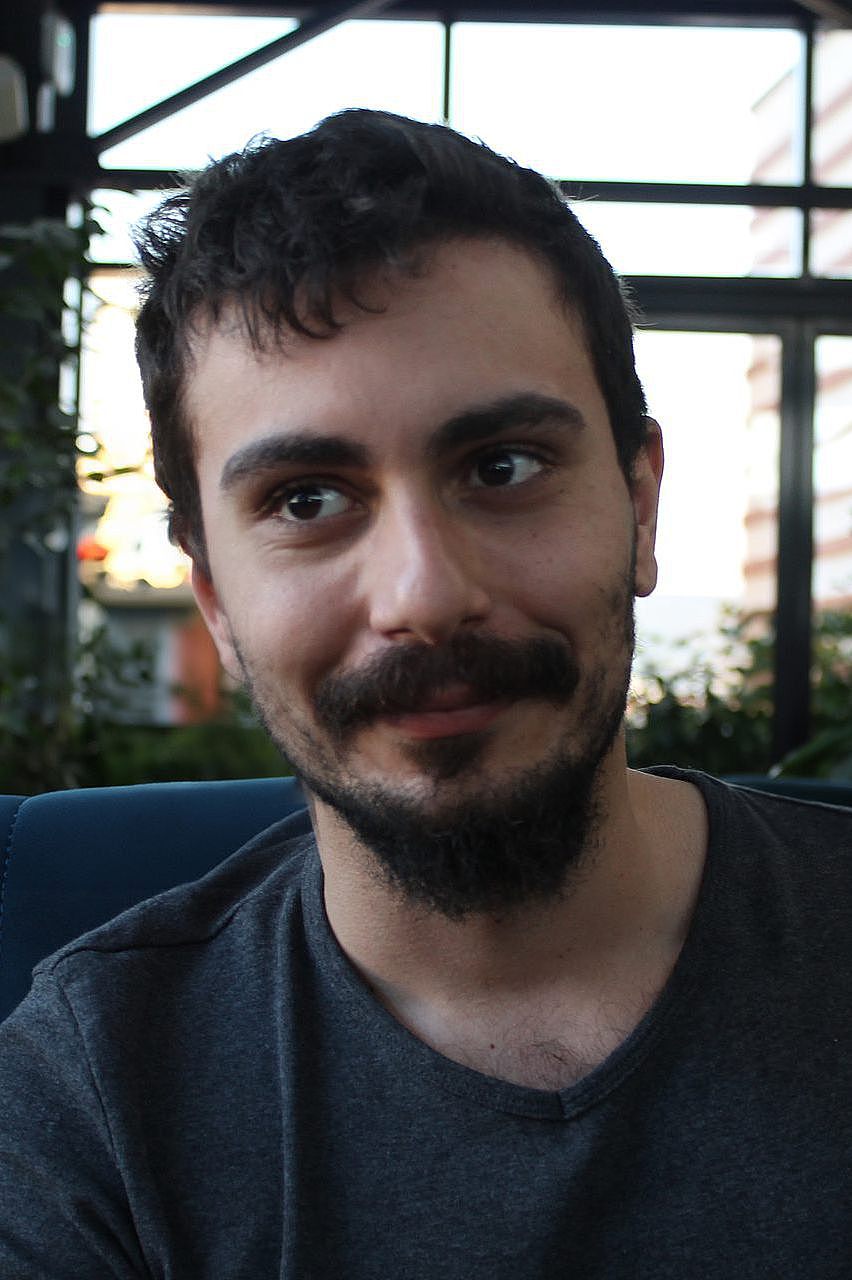
Dr. Ezel Üsten
Institute for Advanced Simulation, Zivile Sicherheitsforschung, Research Centre Jülich
Dr. Ezel Üsten completed a degree in Sociology, followed by a master’s degree in Psychology and a PhD in Social Psychology. He is currently a member of the Social Psychology department at the Institute for Advanced Simulation, Forschungszentrum Jülich, where he focuses on pedestrian and crowd dynamics. His research focuses on social behaviour, perception, social norms, and motivational processes as expressed by individuals and groups in crowds.